Available now on Amazon

Available now on Amazon
Amazon Best Seller

Mafia Hit Man Confesses to Killing President Kennedy

By Jim Meyers

Mafia hit man James Files says in interviews first aired nationally on Newsmax TV Thursday night that he worked along with major mob figures and fired the shot that killed Kennedy from the grassy knoll at Dealey Plaza in Dallas.

Friday, Nov. 22 marks the 51st anniversary of President John F. Kennedy's tragic assassination and Newsmax TV marked the occasion by airing the provocative premiere of the blockbuster documentary "I Killed JFK", featuring never-before-seen footage of Kennedy's confessed killer.

The documentary, produced by Hollywood’s Barry Katz, presents convincing forensic evidence supporting Files' contention that he, and not Lee Harvey Oswald, fired the fatal shot at America's 35th president.

"I squeezed off my round. I hit him and blew his head backward," Files said of the single shot he fired that fateful day.

"I Killed JFK" Executive Producer Barry Katz said: "Until now, no one has ever confessed to the murder of JFK, and most people still believe that Lee Harvey Oswald was the killer. After the world sees this special, I am confident that the greatest mystery of our generation will finally be solved."
Files, who changed his name from Jimmy Sutton, was born in Alabama in 1942, and after a stint in the Army became associated with both the Chicago mob and the CIA.

He worked under mobster Charles "Chuckie" Nicoletti, an underling of mob boss Sam Giancana. Giancana and other mobsters had been angered by the president’s brother, Robert, who as U.S. attorney general was targeting organized crime in a major prosecution effort.

Retired FBI Special Agent Zack Shelton appears in the documentary and reveals that he provided inside information to private investigator and Kennedy assassination investigator Joe West about Files possible connection to the Kennedy killing.

Two decades after the assassination, Files told West he would confess to Kennedy's killing in return for immunity from prosecution. West was negotiating on Files' behalf when he died in 1993.

Files is currently incarcerated at the Danville Correctional Center in Danville, Ill. He was convicted of the attempted murder of two police officers during a roadside shootout in 1991 and sentenced to 50 years in prison.

The documentary chronicles how Files, along with Nicoletti and mobster Johnny Roselli, came to be in Dallas on the day Kennedy was assassinated.

In his "I Killed JFK" interviews from prison, Files tells why he chose to position himself on the grassy knoll to await JFK's motorcade while another shooter took a different position.

"I've got the railroad yard in back of me," he said. "We got a parking lot there and I got a place where I could stash whatever I would need, and I could pass myself off as a worker in the railroad yard for the time being until the time comes and nobody would really pay any attention to me."
Shortly before the assassination, Files said, "I went back to the plaza, got my briefcase out with the gun in it. I went into the railroad yard, put it away where nobody could see it."

As the Kennedy motorcade entered the plaza and made a turn, the president's car cruised past a street sign in front of Files.

"That's when I started focusing through the scope. As far as I can see at this point the president has not been hit in the head. I've seen the body lurch. I know he's been hit. How serious I don't know.

"But my last instructions were we're going for head shots. If you have to take a shot take it, but don't fire unless you really have to.

"I was aiming at his right eye. When I pulled the trigger it was almost like looking from six feet away through the scope.

"As I squeezed his head moved forward. I missed and got it right along the temple, right behind the eye. I squeezed off my round. I hit him and blew his head backward. I fired one shot and one shot only.

"I never saw Mr. Nicoletti shoot Kennedy but I know he was the man in the building who was supposed to be doing the shooting.

"As I was leaving Dealey Plaza nobody tried to stop me. There were two police officers within 20, 25 feet of me. I didn't run. I just carried a natural gait and proceeded to exit, just like a businessman walking away from lunch."

Files, who received no compensation for the interviews, spoke of a shell casing he ejected from his gun.

"I took the shell casing. I bit down on it. I looked at it and set it on the stockade fence. There was an indentation from my teeth on the shell casing."

A man and his son discovered a casing of the same caliber in the area just behind where Files claimed he was positioned on the grassy knoll in 1987. The casing was buried four inches in the ground. A dental forensics expert confirmed that an indentation on the casing was made by human teeth.

Shelton is one of two former FBI agents who believe Files' story is credible.

He said: "I have tried to verify Files' story. A lot of that story I have been able to verify," including that a shot was fired from the grassy knoll "exactly where Files said he was standing."
The documentary presents mounds of other evidence that Kennedy's assassination was not the work of a lone gunman and that Files' account is more credible than the official version put forth by the Warren Commission.

Files himself asserts: "Oswald never fired a shot."

"I Killed JFK" will re-broadcast on Newsmax TV on Friday, Nov. 21, at 11 p.m. and midnight EST, on Saturday at 2 a.m., 10 a.m., and 10 p.m. EST, on Sunday at midnight and 8 p.m. EST, and Monday at midnight EST.

Newsmax TV is America's fast-growing news and information channel, now carried in more than 35 million U.S. satellite and cable homes on DirectTV Ch. 349 and Dish Network Ch. 223.

Newsmax TV also is available online at newsmaxtv.com, via OTT devices and as a free Newsmax TV app on iPhone (iOS), Android and other smartphones.

Read Latest Breaking News from Newsmax.com http://www.Newsmax.com/Newsfront/john-kennedy-assassination-confession-mafia/2014/11/20/id/608736/#ixzz3KOWoyRxw
Anniversary of John F Kennedy Assassination: Who Was Jack Ruby, the Forgotten Assassin's Assassin?

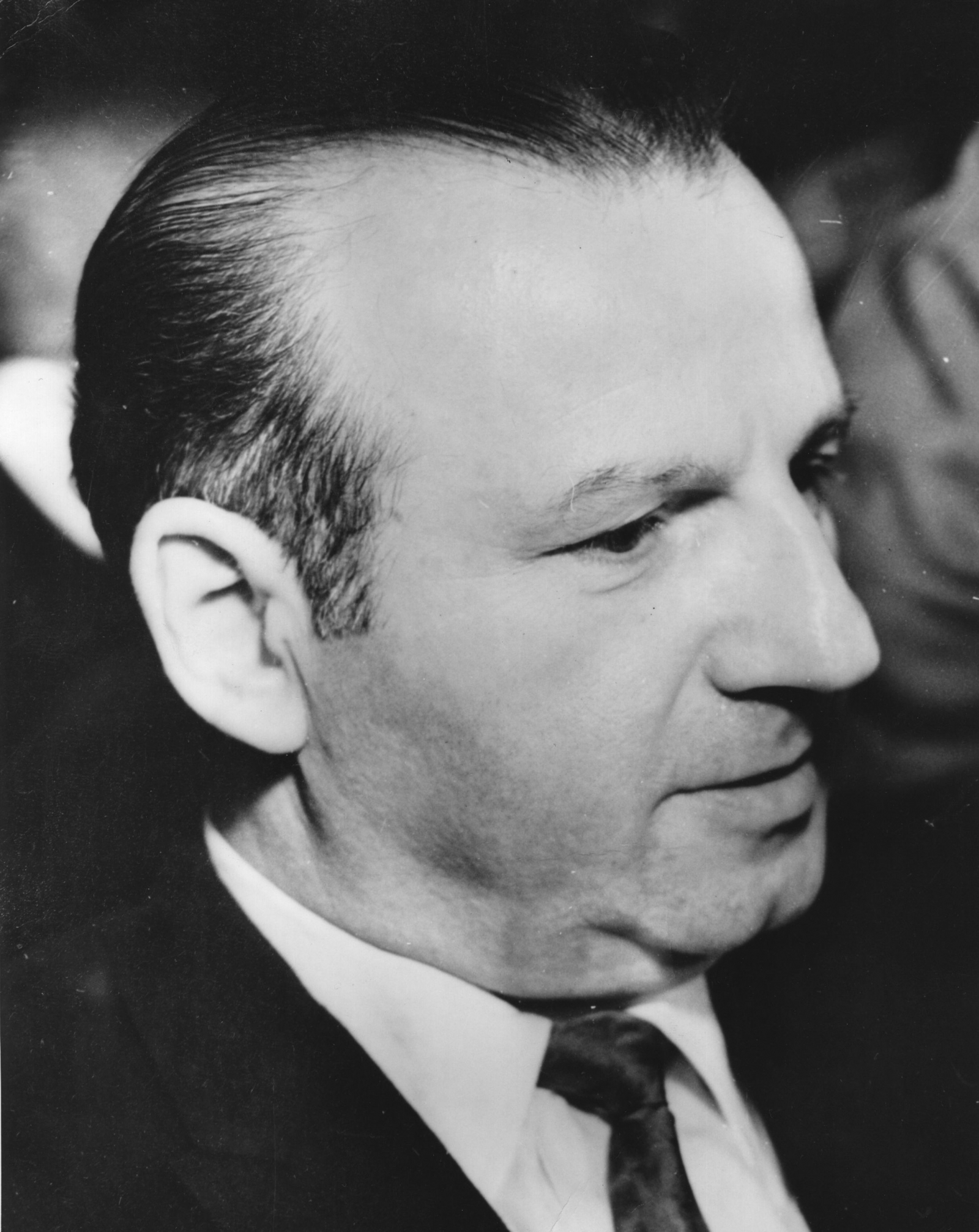
Jack Ruby

Jack Ruby in January 1964

Lee Harvey Oswald

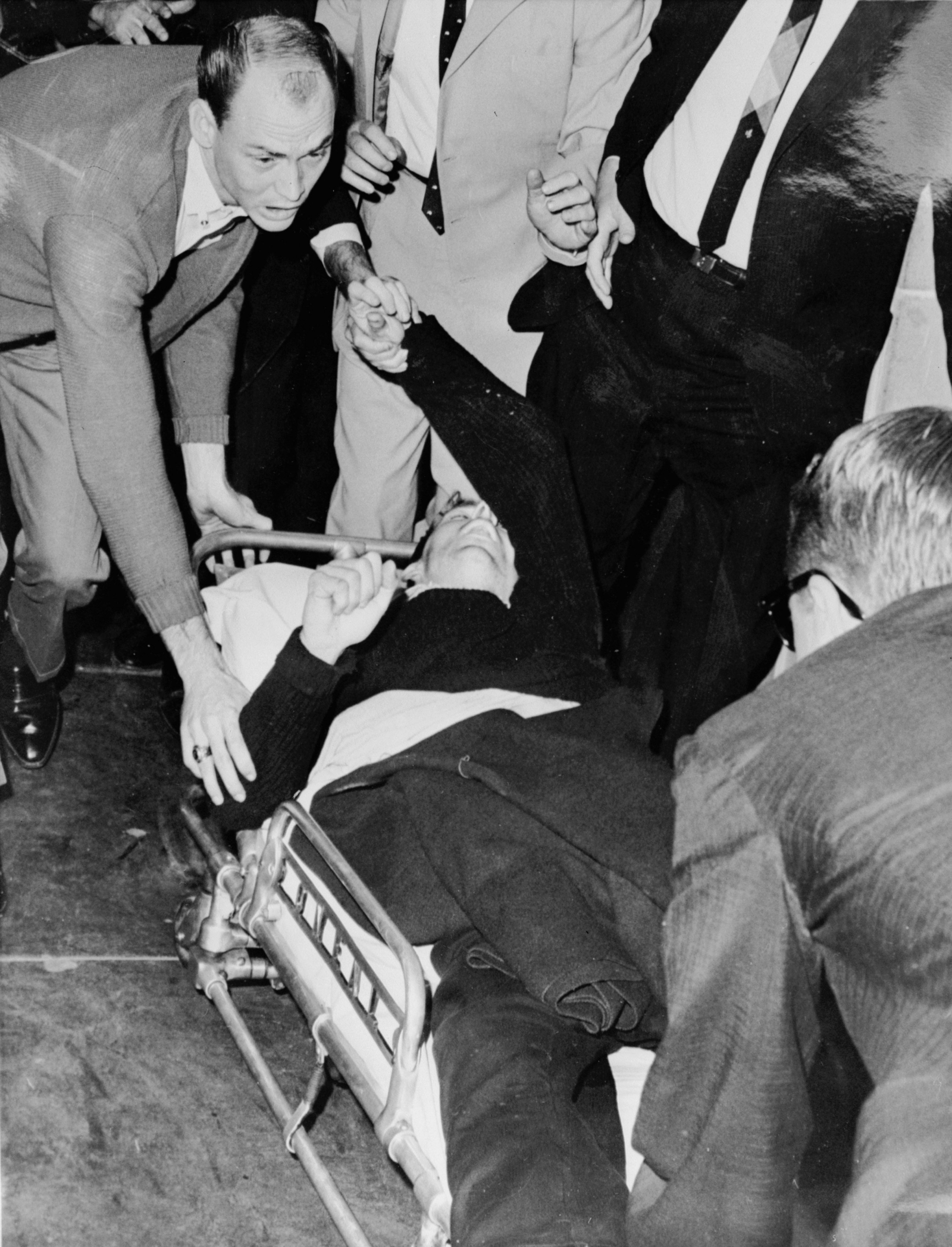
Lee Harvey Oswald is hurried into an ambulance after being shot at Dallas City Prison by nightclub owner Jack Ruby (Getty)

By Lydia Smith

Two days after US president John F Kennedy was shot dead on 22 November, his assassin Lee Harvey Oswald was to meet the same fate while being led through the basement of the Dallas Police Headquarters on his way to county jail.
 
Dallas nightclub operator Jack Ruby had been waiting in the corridor among the gathered pressmen. He stepped out and shot the president's killer in the chest in full view of witnesses and television pictures. The bullet penetrated Oswald's stomach, tearing his vena cava and aorta.
 
The unconscious Oswald was rushed to Parkland Memorial Hospital where, in an ironic twist of fate, doctors had 48 hours earlier tried to save the life of President Kennedy. Oswald's death was, however, soon after announced to millions of stunned viewers on a television broadcast by the Dallas police chief.
 
Life of crime
 
Jack Ruby, born Jacob Leon Rubenstein, had a childhood marked by juvenile delinquency and spent time shifting between foster homes. Moving on from selling horse-racing tip sheets in Chicago, he was drafted into service in 1943 to join the US Army Air Force during World War II. He worked as an aircraft mechanic at bases in the US until 1946.
 
One year later, he moved to Dallas with his brothers, where he went on to manage nightclubs, strip clubs and dance halls. Over time, he developed close ties to Dallas police officials, who frequented the nightclubs and were provided with free prostitutes and liquor.
 
Ruby's ties to the criminal world became apparent in 1959, when he went to Cuba to visit his friend Lewis McWillie, an influential Dallas gambler and associate of mafia boss Santo Trafficante. British journalist John Wilson-Hudson, who was imprisoned in Cuba at the time, claimed that Ruby may have met with Trafficante directly.
 
In the 1950s, Ruby was reportedly involved with smuggling guns and ammunition from Galveston Bay, Texas, to Fidel Castro's guerrillas in Cuba. James Beaird, who claimed to be a poker player with Ruby, told the FBI that Ruby did not have a side – but was "in it for the money".
Blaney Mack Johnson, an FBI informant, said Ruby was "active in arranging illegal flights of weapons from Miami" to Cuban pro-Castro forces in the early 1950s.
 
Assassination of Kennedy, motives and Mafia conspiracies
 
Many have speculated that Ruby was deeply involved in organised crime, while conspiracy theorists assert that Ruby shot Oswald as part of an overall plot surrounding the assassination of Kennedy.
 
Yet the Warren Commission – which attempted to reconstruct Ruby's movements around the time of JFK's murder – found no evidence linking his killing of Oswald to any larger conspiracy to assassinate the president.
 
According to the Commission, Ruby was in the second-floor advertising offices of the Dallas Morning News when he heard about the assassination of Kennedy just five streets away, at the Texas School Book Depository.
 
The Commission stated that there was no "significant link" between Roby and organised crime, in a 1964 biography.
 
Fifteen years later, however, the House Select Committee on Assassinations (HSCA) said in a similar investigation that he "had a significant number of associations and direct and indirect contacts with underworld figures". They added that despite this, Ruby was not a "member" of organised crime.
 
In March 1964, Ruby was convicted for murder with malice for the death of Oswald. A year later, Ruby conducted a brief televised news conference, in which he hinted that his motives may have been influenced by underworld crime.
 
"Everything pertaining to what's happening has never come to the surface. The world will never know the true facts of what occurred, my motives," he said.
 
"The people who had so much to gain, and had such an ulterior motive for putting me in the position I'm in, will never let the true facts come above board to the world."
 
When asked by a reporter: "Are these people in very high positions, Jack?", he responded "Yes."
Ruby was known to be acquainted with both the police and the mafia. The HSCA noted that Ruby had known mob boss of the Chicago Outfit Sam Giancana and Joseph "Egyptian Joe" Campisi, the alleged boss of the Dallas crime family of the American mafia from 1973 until 1990.
 
In 1979, the House Select Committee on Assassinations stated: "Ruby's shooting of Oswald was not a spontaneous act, in that it involved at least some premeditation."


Reputed mob boss Joseph Andriacchi lists River Forest mansion for $2.15 million


Flashback: Chicago Voters Elect "Made Member " of Chicago Mob to City Council

Flashback: Chicago Voters Elect "Made Member " of Chicago Mob to City Council For 23 Years- He Pushes Through Chicago's Handgun Ban


Alderman Fred Roti
 
The American Thinker. He was a "high ranking" made member of the Chicago Mob. His job was to disarm law abiding citizens. He got the job done in 1982. Chicago's City Council chambers were part of a racketeering enterprise for mail and wire fraud.
 

Sam Giancana's daughter aims to cash in on gangster's memorabilia

By JOHN M. GLIONNA contact the reporter
 
CrimeLifestyle and LeisureAl CaponeFidel Castro
 
Notorious gangster's mementos to be on auction block, as well as coroner's report on his slaying. Sam Giancana liked to boast that he owned Las Vegas, Miami and Chicago -- where he was shot to death. Gangster Sam Giancana was shot to death in '75 at his Chicago-area home; family said they heard nothing.
 
He was one of Sin City’s original gangsters, an international crime boss who liked to brag that he owned Las Vegas, and an unapologetic irritant of Atty. Gen. Robert F. Kennedy.
Sam Giancana has been dead for decades -- shot execution-style in 1975 as he prepared a midnight snack of sausages and spinach in the basement of his Chicago-area home. But many of his prized possessions are still around -- and some are being sold Saturday in Las Vegas.
 
Organizers say the estate auction features a significant Mafia antique collection of a crime figure once characterized as a “tough, swaggering, flamboyant murderer.” He was the most outrageous gangster of all time - the FBI followed him everywhere. Many say he was under contract to help the CIA kill Fidel Castro.- Geno Munari, owner of Munari Auctions.
 
Available for bidding both online and at the Gambler’s General Store in downtown Las Vegas are never-before-seen photographs, including a rare snapshot with Frank Sinatra, court transcripts, arrest reports, the coroner’s report and such personal mementos as monogrammed silverware and wine glasses. Each item includes a certificate of authenticity, signed and verified by his surviving daughter, Antoinette Giancana, said Geno Munari, owner of Munari Auctions.
 
“He was the most outrageous gangster of all time – the FBI followed him everywhere,” Munari said. “Many say he was under contract to help the CIA kill Fidel Castro. He was also a guy who wrote beautiful cards to his wife. The auction features the good and the bad of a notorious crime boss.”
 
Born Momo Salvatore Giancana, he rose to become a powerful chief of the Chicago crime syndicate in 1955, taking over the daily operations from the aging Anthony “Big Tuna” Accardo. Both Giancana and Accardo worked in the old Al Capone gang of the 1920s and '30s.
 
Tony Montana, a Las Vegas resident who once served on Giancana’s staff, said Capone had no choice but to incorporate Giancana after he helped start a rival Chicago syndicate called the 42 Gang. “He was into some things with a bunch of guys, including Milwaukee Phil and the English brothers, and they were robbing and shaking down so many joints that Capone took notice of them,” he said. “They were young and he figured he’d better bring them on board.”
 
Giancana soon became the new face of U.S. organized crime, leading the criminal infiltration of labor unions, gambling casinos and legitimate businesses, relying more on corrupt politicians and police than on his own thugs.
 
Early on, Giancana developed a reputation as a killer. During World War II the draft board labeled him “a constitutional psychopath with an inadequate personality.” In a military interview, when asked what he did for a living, Giancana matter-of-factly replied, “I steal.”
Officials sent him home as unfit for service. And they didn’t know half of it, unaware of the illegal mayhem Giancana would eventually inflict.
 
Years later, in Las Vegas, he bragged about rubbing elbows with Frank Sinatra and the Rat Pack as he ran various casinos. He once told an FBI agent: “I own Chicago. I own Miami. I own Las Vegas.” Michael Green, a historian at UNLV, said Giancana’s power in Sin City was shadowy but very real. “As Woody Allen once said, ‘Organized crime figures saved a lot of money on office space."
 
Giancana was one of the first inductees into the so-called Black Book, a list of undesirables compiled by the Nevada Gambling Commission, and he had an invisible hand in running “almost certainly the Riviera and possibly the Sands,” Green said.
 
We all committed crimes. If we didn't, we wouldn't have anything to talk about.- Tony Montana of Las Vegas, who once served on Sam Giancana's staff. His criminal career included a shadowy relationship with the CIA. In exchange for his help organizing a plot to kill Castro, experts say, agents tapped the hotel room of comedian Dan Rowan, who Giancana suspected was interested in his then-girlfriend, Phyllis McGuire -- the youngest member of the McGuire Sisters -- whom he met in Las Vegas in 1960.
 
Montana said his job for Giancana was to help set up new bars and restaurants. “He had to make money somewhere legitimately and he couldn’t legally get a liquor license,” he said.
Giancana lived most of his final years in Mexico, on the lam from federal authorities, but was deported back to the U.S. in 1974. Within a year, he was dead. As federal authorities pressured him to open up to a newly formed grand jury, the aging mob boss was shot six times at close range late one night, before he got to enjoy his midnight snack – his end as violent as his life.
 
Dressed in a sports shirt and slacks, he was found lying face-up in a puddle of blood. His wife was on the second floor of the fortress-like home in Oak Park, and told police she heard nothing.
 
Experts say mob figures believed Giancana, 67, was planning to talk to federal authorities about their activities. He was set to appear before a Senate committee in Washington a few days later.
 
Montana said the items for auction on Saturday include several valuable photos, including one of the capo on the beach, accompanied by bodyguards including Murray “The Camel” Humphries.
 
Montana then launched into a brief history of which figures “got whacked” and why, including a list of their crimes.
 
“We all committed crimes,” he said. “If we didn’t, we wouldn’t have anything to talk about.”

Cold case, San Mateo: Mob hit suspected in 1952 car-bombing death of prominent sportsman/Chicago Connection

By Natalie Neysa Alund
Bay Area News Group
  
SAN MATEO -- Wealthy Peninsula sportsman Tom Keen started his morning on Feb. 2, 1952 by giving some duck eggs to a friend. Then he kissed his wife goodbye and got into his Cadillac.
Moments later, when he turned the key in the ignition, a fiery ball of flames consumed the garage of Keen's prestigious 16-room San Mateo home. The 56-year-old man was dead from a suspected car-bombing mafia hit that remains a mystery.
 
"No one was ever singled out as the car bomber, but the mob was the suspect," San Mateo Police Sgt. Rick Decker said of the more than half-century old cold case that centers around Keen, who held a prominent position in dog-racing circles across the nation.
 
The proof, Decker said, is inside the department's meaty case file -- a beat-up box containing deteriorating manila folders that contains evidence, including pieces of detonator wire and chunks of shrapnel removed from Keen's body after his death.
 
Evidence revealed that when Keen started the Cadillac in his garage at 105 Hayward Ave., sticks of dynamite strapped to the bottom of the car exploded.
 
The blast blew Keen's body into the back of the car, shearing off his legs. Neighbors rushed to the scene believing a water-heater had exploded and called the fire department.
To friends, Keen was a "hearty backslapping sportsman with a million friends," according to reports published by the Oakland Tribune in 1952.

A businessman and engineer, he built the country's first dog-racing track in Belmont in the late 1930s and later established and ran the Town and Country track in Bayshore City.
 
Keen owned the International Totalizer Co. in Belmont. The company had a virtual monopoly on installing dog-race betting equipment at tracks throughout the nation in cities including Denver, Miami and Chicago.
What may have been his downfall, police said, was his invention of a machine that shows the odds before a race and the race's winning payoffs.
Published reports from the San Mateo Times indicated gangsters wanted to buy Keen's business because "anything that is mechanical can be rigged for a profit" and that gamblers were angered by Keen because "the odds on the dogs weren't coming out of his machines the way the boys wanted them to."
The unidentified sources said Keen refused to sell and his machine guaranteed absolute honesty in betting odds. San Mateo police investigators were looking into reports that, the year before his death, Keen resisted gangster proposals to "fix" the machines in the interest of gamblers.
Decker, who oversees the cold case, said Keen also had connections to "Scarface" Al Capone. Keen and local two local business partners set up a dog-racing track on property owned by Capone in Cicero, Ill, where he became closely associated with one of Capone's "front men" Edward J. O'Hare, who was killed in a 1939 gangland slaying that was never solved.
Keen later dropped out of the Chicago scene and moved to San Mateo, where he continued running dog tracks.
Today, cold case homicide investigators said they don't have much hope of finding out who placed the dynamite under Keen's car.
Too much time has passed, Officer Anthony Riccardi said. "Anything that's been kept quiet for more than 50-60 years likely involves the mafia and typically people don't talk when the mob is involved. Ever."
In addition, evidence is deteriorating and the suspect and witnesses would be very old, if not dead, Decker added.
"If the guy who did it was 18, he's 80 now, and most of the people involved in the case were in their 40s," Decker said. "The suspect and witnesses are likely about 100 today. Like with Jimmy Hoffa's disappearance, it appears it's a true mafia case that may never be solved."
Anyone with information about this case is asked to call police at 650-522-7626
Contact Natalie Neysa Alund at 510-293-2469. Follow her at Twitter.com/nataliealund.


"A Gun In My Gucci:" Former FBI agent shares career of intrigue

Posted: Nov 10, 2014 9:53 PM CST
 
Updated: Nov 11, 2014 3:53 PM CST
 
 
Elaine Smith, a former FBI special agent, wrote a book about her career.
Ken Eto, also known as "Tokyo Joe," survived a mob hit to figth back with Smith.
 
Ken Eto, also known as "Tokyo Joe," survived a mob hit to fight back with Smith.

CARMEL, Ind. -  
          
At age 36, Elaine Smith got a late start as an FBI agent - but she quickly made up for lost time.
The story of her trailblazing career is a story filled with violence, intrigue and the mob.

"His name was Ken Eto, 'Tokyo Joe'," Smith told Eyewitness News reporter Kevin Rader in her living room.

It was Chicago, February 1983. Eto was shot three times by the mob.

"The first survivor out of 1,100 mob murders in the history of Chicago to live and tell about it and he only knew one name in the FBI and it was my name," she continued.

Smith's new book, "A Gun in my Gucci," details how two outsiders would work together to take down the Chicago mob.

"To have a mobster ask for you on his deathbed is an amazing thing," she added.

But he didn't die and for the next 17 years Eto and Smith, who has called Carmel home for the last ten years, made the mob pay. The two mobsters who botched the murder met their untimely death one week later.

"Oh man, this is great stuff. I can't wait to get it written down and tell everybody. We gotta open a case on this. We need to do this and this and this. I was very excited. I knew it was a pot of gold," she remembered.

Forty-five mobsters would be brought to justice in cases involving millions of dollars. The Teamsters would be turned inside out and former Illinois Governor George Ryan would be turned out of office in disgrace.

"Everybody suspected George Ryan, but no one had hand-to-hand payment to him, but he had," Smith noted.

Even today, 12 years after she retired, Smith handles the handcuffs with the expertise of an FBI agent and she misses that .45 pistol.

"I left the FBI and I knew it was going to be changed. I would have loved to stick around to see how it would be changed and see how things were going to go," Smith reflected.

She says the book which she dedicated to her husband Tom, who was also an FBI agent, took six months to write.

"People ask, 'Did you do any undercover?' I said no. I never wanted to be anyone's girlfriend, wife or somebody's secretary. That is not why I went to school and that is not who I grew up to be," she stated.

She grew up to be the first Supervisory Special Agent in the Chicago FBI. A position she held the final 10 years she spent in the bureau.

"I think this would be a fabulous movie. You would just need to sex it up," she concluded.
But there is an abundance of violence and intrigue.

By the way the Smiths are both retired from the FBI, which means they were the very first Mr. & Mrs. Smith.

But they didn't try to kill each other. They helped each other.